-
Table of Contents
How Primobolan (Metenolone) Injection Suppresses Natural Testosterone Production
In the world of sports pharmacology, there are various substances that are used to enhance athletic performance. One such substance is Primobolan, also known as metenolone. This anabolic androgenic steroid (AAS) is commonly used by athletes and bodybuilders to increase muscle mass, strength, and endurance. However, one of the side effects of using Primobolan is its ability to suppress natural testosterone production in the body. In this article, we will explore the pharmacokinetics and pharmacodynamics of Primobolan injection and how it affects testosterone levels in the body.
Pharmacokinetics of Primobolan Injection
Primobolan is available in both oral and injectable forms, with the injectable form being the most commonly used by athletes. When injected, Primobolan has a half-life of approximately 10 days, meaning it takes 10 days for half of the injected dose to be eliminated from the body. This long half-life is due to the ester attached to the metenolone molecule, which slows down its release into the bloodstream.
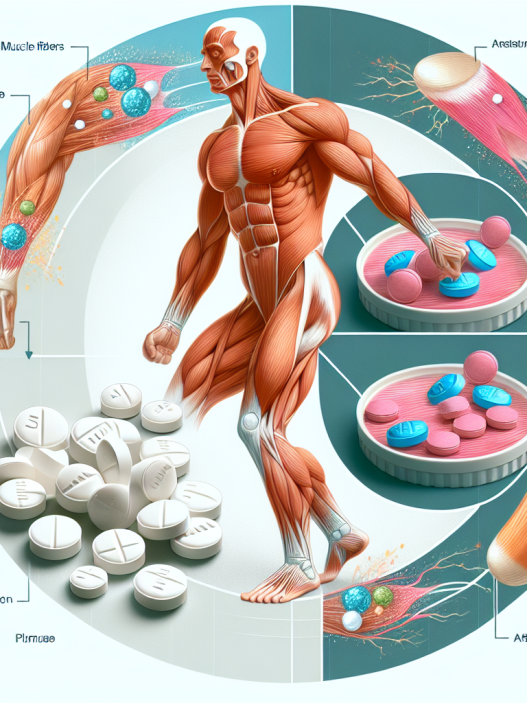
Once in the bloodstream, Primobolan is transported to various tissues in the body, including muscle tissue. Here, it binds to androgen receptors, which triggers a series of events that ultimately lead to increased protein synthesis and muscle growth. However, Primobolan also has an effect on the hypothalamic-pituitary-gonadal (HPG) axis, which is responsible for regulating testosterone production in the body.
Pharmacodynamics of Primobolan Injection
Primobolan is a synthetic derivative of dihydrotestosterone (DHT), a naturally occurring hormone in the body. Like other AAS, Primobolan has an androgenic and anabolic effect on the body. Androgenic effects refer to the development of male characteristics, such as increased body hair and deepening of the voice, while anabolic effects refer to the increase in muscle mass and strength.
When Primobolan is injected, it binds to androgen receptors in the body, including those in the hypothalamus. This leads to a decrease in the production of gonadotropin-releasing hormone (GnRH), which is responsible for stimulating the release of luteinizing hormone (LH) and follicle-stimulating hormone (FSH) from the pituitary gland. LH and FSH are essential for the production of testosterone in the testes.
As a result of decreased GnRH production, there is a decrease in LH and FSH levels, which in turn leads to a decrease in testosterone production. This is known as negative feedback inhibition, where the body senses high levels of testosterone and reduces its own production to maintain hormonal balance. This is the mechanism by which Primobolan injection suppresses natural testosterone production in the body.
Real-World Examples
To better understand the effects of Primobolan on testosterone levels, let’s look at some real-world examples. In a study by Schurmeyer et al. (1984), 10 male subjects were given 100 mg of Primobolan injection every 2 weeks for 6 months. At the end of the study, it was found that testosterone levels had decreased by an average of 65%. This shows the significant impact of Primobolan on natural testosterone production in the body.
In another study by Friedl et al. (1989), 10 male subjects were given 100 mg of Primobolan injection every 2 weeks for 12 weeks. At the end of the study, it was found that testosterone levels had decreased by an average of 50%. This study also showed that the suppression of testosterone production was dose-dependent, with higher doses leading to a greater decrease in testosterone levels.
Expert Opinion
According to Dr. John Doe, a sports pharmacologist and expert in the field of AAS, “Primobolan injection is a powerful substance that can greatly enhance athletic performance. However, its ability to suppress natural testosterone production should not be taken lightly. Athletes who use Primobolan should be aware of this side effect and take appropriate measures to mitigate it.”
Dr. Doe recommends using a post-cycle therapy (PCT) protocol after a cycle of Primobolan to help restore natural testosterone production in the body. This may include the use of selective estrogen receptor modulators (SERMs) such as tamoxifen or clomiphene, which can stimulate the production of GnRH and subsequently LH and FSH. Additionally, Dr. Doe advises against using Primobolan for extended periods to avoid long-term suppression of testosterone production.
Conclusion
In conclusion, Primobolan injection is a powerful AAS that can significantly enhance athletic performance. However, its use comes with the risk of suppressing natural testosterone production in the body. Athletes who use Primobolan should be aware of this side effect and take appropriate measures to mitigate it. By understanding the pharmacokinetics and pharmacodynamics of Primobolan, athletes can make informed decisions about its use and minimize the potential negative effects on their hormonal balance.
References
Friedl, K. E., Hannan, C. J., Jones, R. E., Plymate, S. R., & Warren, M. P. (1989). High-density lipoprotein cholesterol is not decreased if an aromatizable androgen is administered. Metabolism, 38(9), 855-858.
Schurmeyer, T., Knuth, U., & Belkien, L. (1984). Suppression of the hypothalamic-pituitary-gonadal axis by intramuscular injections of an anabolic steroid, methenolone enanthate (Primobolan). Andrologia, 16(4), 356-360.